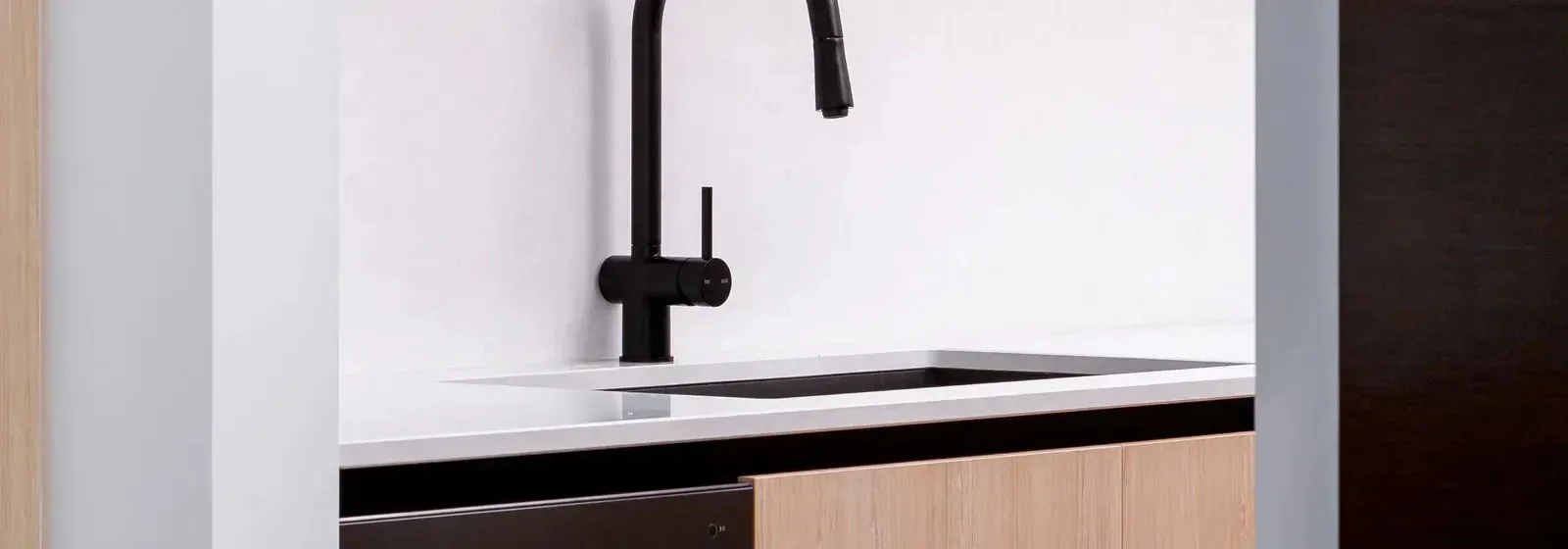
Stone Comparison: Choosing the Right Countertop for Your Cabinetry
Your cabinetry is built to last for decades — your countertop should be too. Here’s how the four most popular kitchen stones actually perform in daily use, so you can choose the one that fits how you cook and live.
1. ควอตซ์ (หินสังเคราะห์) | Quartz (Engineered)
Quartz countertops are roughly 93% crushed quartz bound with resin. They’re non-porous, so they never need sealing, and they shrug off stains and scratches. The trade-off is heat: the resin starts to soften around 150°C, so hot pots and pans can’t go straight from stove to surface. The pattern is consistent across slabs and the color range runs into the hundreds. Best for: busy kitchens, families with kids, and anyone who’d rather not babysit their countertop.
2. ควอตไซต์ (หินธรรมชาติ) | Quartzite (Natural)
Quartzite is a natural metamorphic stone — harder than granite (7 Mohs vs. granite’s 6–6.5) and heat-tolerant up to roughly 540°C. It also resists acid etching. The catch is that it’s porous, so it needs to be resealed about once a year. Visually it reads like marble, but it performs like granite. Best for: people who want the marble look without the marble maintenance.
3. แกรนิต (หินธรรมชาติ) | Granite (Natural)
Granite is naturally heat- and scratch-resistant. It’s porous, so it needs sealing every 1–2 years. Every slab is one of a kind, the price is friendlier than quartzite, and the color and pattern range is wide. Best for: traditional kitchens, cooks who use cast iron, and anyone who wants a top with a clear personality.
4. หินอ่อน (หินธรรมชาติ) | Marble (Natural)
Marble is the classic — and the softest of the four (Mohs 3–5). It’s porous and acid-sensitive: lemon juice, wine, and vinegar will etch the surface. It handles heat well and develops a patina (a kind of earned character) over time. Best for: bakers — the cool surface is ideal for working dough — and anyone who welcomes the lived-in marks that come from real use.
Side-by-side comparison
| Material | Hardness (Mohs) | Heat tolerance | Sealing |
|---|---|---|---|
| Quartz | 7 | Low (~150°C) | None |
| Quartzite | 7 | High (~540°C) | Yearly |
| Granite | 6–6.5 | High | Every 1–2 years |
| Marble | 3–5 | High | Every 6 months |
 CONCLUSION
The bottom line: no stone is “best” — only “best fit”
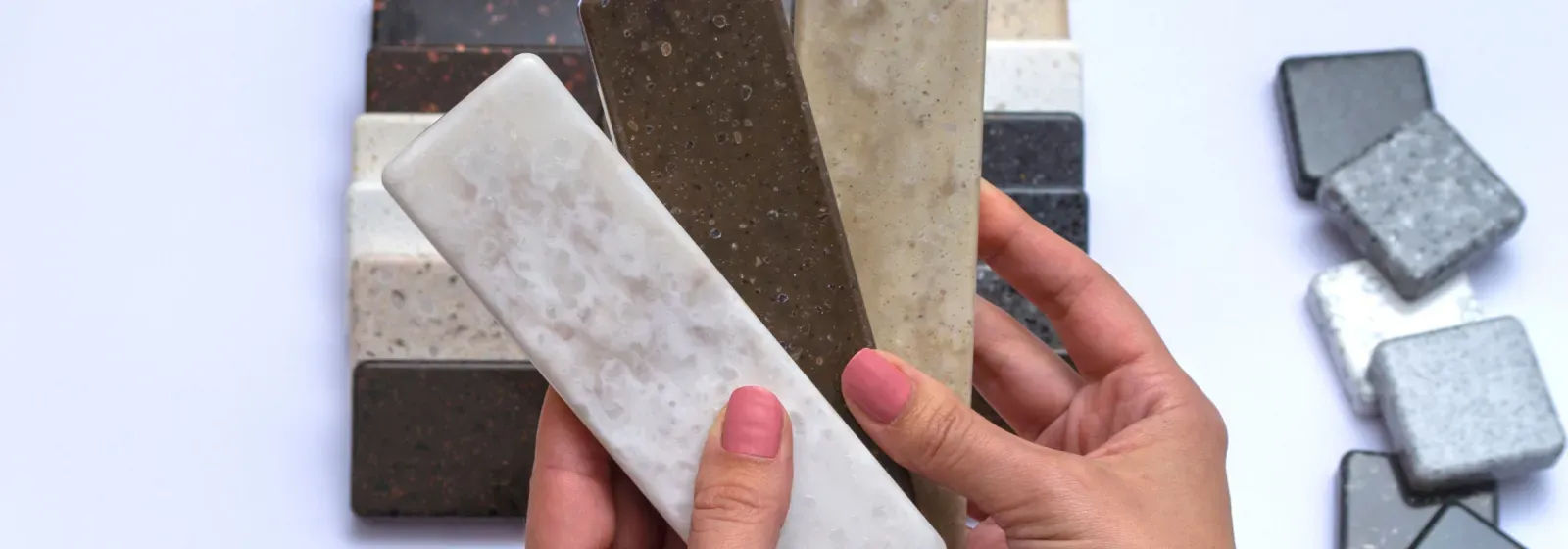
The right choice comes down to lifestyle. If you cook every day and don’t want to think about maintenance, quartz or quartzite is the answer. If you love natural stone and don’t mind a bit of upkeep, granite is for you. And if beauty matters most and you can embrace the marks of real use, marble will reward you with character that only grows over time.
Our g-code cabinetry team is happy to walk you through it and pair the right countertop with your cabinet design — so you can place your order with confidence.